

EU AI Act compliance that keeps your AI deployable
Scope your AI systems, classify risk, and build the documentation, governance, and controls you’ll need — without freezing product delivery.
No automated signup flows — just discovery + a clear proposal aligned to your AI roadmap.
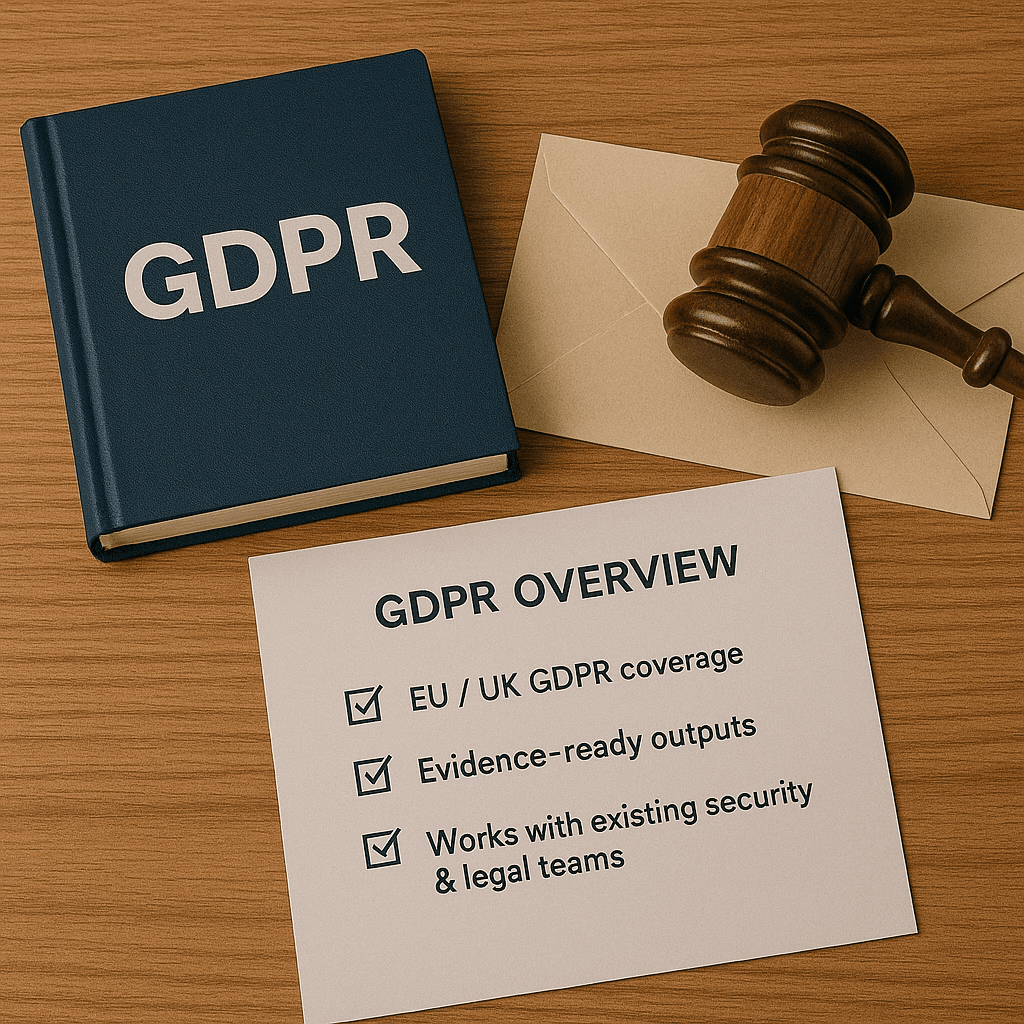
Examples (inventory / risk / technical file)
Outcomes
Compliance outcomes you can prove
Evidence-led delivery designed for audits, procurement, and regulator expectations.
Inventory of AI systems, mapped to EU AI Act roles (provider, deployer, importer) and risk categories (prohibited, high-risk, limited, minimal).
Technical documentation, policies, and records structured so you can answer regulators, enterprise customers, and internal audit quickly.
Practical workflows for monitoring, incident management, and continuous improvement that work with your product and data teams.
Scope
What’s included as standard
Practical deliverables that your product, data, and legal teams can maintain.
Identify AI systems, map roles (provider/deployer), and classify risk in line with the EU AI Act.
Risk management framework, governance cadence, and documentation you can actually maintain.
Structure for technical documentation, logs, and records expected for in-scope and high-risk systems.
Support with due diligence questionnaires, security reviews, and explaining your AI controls to customers.
Alignment with GDPR, DPIAs/FRIAs, and controls around training data and model behaviour.
Issues and incidents intake, escalation paths, and tracking improvements over time.
Clarity
How we work in practice
Clear delivery expectations — and what typically fails elsewhere.
| Capability | Our approach | Typical alternatives |
|---|---|---|
| Scoping your AI systems | Structured inventory & clear map of in-scope AI systems. | Ad-hoc list in a spreadsheet. |
| Risk classification | Aligned to EU AI Act categories with rationale recorded. | Vague labels with no link to the Act. |
| Documentation | Technical file structure engineering + legal can maintain. | Dense memos or scattered pages. |
| Impact on delivery | Fits sprint cycles and roadmap sequencing. | Big-bang compliance that stalls shipping. |
| Audit & buyer readiness | Evidence pack for regulators and enterprise buyers. | Last-minute scramble for questionnaires. |
FAQ
Questions, answered
We’re not sure if we’re even in scope of the EU AI Act.
We mostly use third-party AI (APIs, SaaS). Does this still matter?
Will this slow down product delivery?
How does this fit with GDPR / security work?
Next step
Request EU AI Act support
Share your AI systems, markets, and timelines. We’ll scope what the EU AI Act means for you and reply with a clear proposal.
- What AI systems exist (or are planned) and who they affect
- Your role: provider, deployer, or both
- Where AI is used (user-facing, internal, scoring, monitoring)
- Deadlines: procurement, launch, audits, regulatory questions
For now this opens your email client pre-filled. You can wire it to a backend or CRM later.